
Seeds In The Bank, Food On The Table: How Biodiversity Biobanks Feed South Africa
Ask most people where their dinner comes from and they’ll say the shop, the market, or the farm down the road. Ask where the next dinner comes from, in twenty years, on a hotter and drier planet, and the answer gets more interesting. Part of it sits in freezers, cold rooms, and seed vaults, in places most of us will never visit.
Most of the calories we eat come, directly or indirectly, from plants. Yet modern farming leans on a small number of high-yielding crop varieties and livestock breeds. That works when conditions are predictable. It works badly when a new disease arrives, the rains fail, or the summers get hotter.
Genetic diversity is the antidote. Somewhere in the pool of traditional varieties and wild relatives are the traits tomorrow’s farmers will need: drought tolerance, disease resistance, or the ability to thrive in poor soil. The catch is that diversity disappears quietly. Once the genes are gone, they’re gone.
“Genetic diversity is the basic factor of evolution in species, explains Dr Noluthando Nenou of the National Plant Genetic Resources Centre (NPGRC). “It is the foundation of sustainability because it provides raw material for adaptation, evolution and survival of species and individuals, especially under changed environmental, disease and social conditions and it will allow them to respond to the challenges of the next century. The future food supply of all societies depends on the exploitation of genetic recombination and allelic diversity for crop improvement and many of the world’s farmers depend directly on the harvests of the genetic diversity they sow for food and fodder, as well as the next season’s seed.”
Biobanks preserve that raw material. They store seeds, tissues, embryos, semen, and cultures under controlled conditions, so traits can be drawn on decades or centuries later, long after the field populations that carried them have vanished.
But biobanks don’t just preserve biodiversity. They also help contribute to food security in othr ways. For example:
- Insurance against loss. Climate change, urban expansion, overgrazing, and invasive species threaten both wild and cultivated diversity. A variety abandoned by farmers or a breed pushed to the edge of extinction can still be recovered from a biobank.
- Protecting smallholder and indigenous systems. Many smallholder farmers depend on landraces and local breeds suited to their conditions and cultural food practices. Banking these resources keeps them from being lost as farming modernises, and in principle allows farmers to regain access to seed or animals that they have lost.
- Supporting nutrition and dietary diversity. Food security is not only about calories. Conserving underutilised crops and wild edible species preserves options for improving micronutrient intake, especially in rural communities where dietary diversity is limited.
- Research and knowledge. Characterising stored material, through phenotyping and genomic sequencing, turns inert collections into usable information. Documented traits help breeders select material efficiently and help researchers understand how local populations have adapted.
So biodiversity biobanks have an important job to do when it comes to food security in South Africa. But who are these biobanks? And what do they do, exactly? Come meet a few…
Thinking Local: The National Plant Genetic Resources Centre
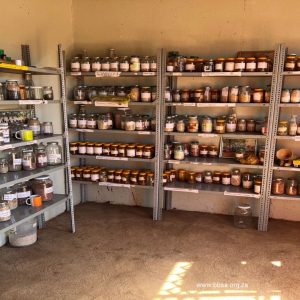
The National Gene Bank has partnered with Bioversity International in a project aimed at establishing and supporting community seed banks in South Africa.
South Africa’s national gene bank sits within the Department of Agriculture’s National Plant Genetic Resources Centre (NPGRC), which was established in 1996. Its job covers the whole chain: collecting seed, multiplying it, characterising and documenting it, and storing it safely. Duplicate samples go to the SADC Plant Genetic Resources Centre, so a single disaster can’t wipe out a collection. Much of that seed comes from subsistence farming communities growing crops like sorghum, calabash, and mung bean by traditional methods. These farmers have spent generations selecting plants that suit their land and their kitchens. Their landraces are living records of that experience, and exactly the raw material breeders want. The flow isn’t one-way, either. The gene bank supports community seedbanks, such as the Gumbu community seedbank, helping local farmers conserve and strengthen their own seed systems. Farmers aren’t just donors to a vault. They’re partners who can get seed back and keep it growing.
Growing Good Grains: The ARC National Small Grain Collection
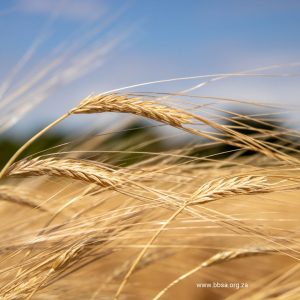
The National Small Grain Collection plays a vital role in the conservation and study of small grain genetic resources for future use.
Grains supply almost half the calories we eat, so it matters where they’re kept. The Agricultural Research Council’s National Small Grain Collection, housed in a purpose-built facility at the ARC campus in Bethlehem, Free State, is the largest collection of small grain germplasm on the African continent. Under Dr Eben von Well and his team, it looks after more than 20,000 accessions, from wheat and barley to rice. Old landraces, retired cultivars, modern breeding lines, and crop wild relatives all sit side by side. Each year, part of the collection is rejuvenated so the seed stays viable, and around 1,000 accessions are evaluated by pre-breeders, entomologists, and pathologists, building up knowledge of what each entry can do. Nurseries imported through partners such as CIMMYT and ICARDA are tested under South African conditions too. That is how a seed in a cold room becomes a better wheat variety in a farmer’s field.
Beyond Grains: A Network Of Agricultural Biobanks
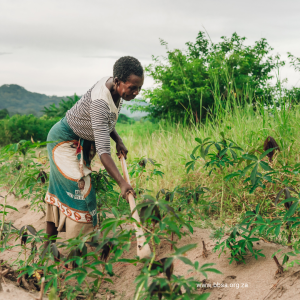
With biobanks over 11 campuses in all nine provinces, the ARC provides critical infrastructure that underpins agricultural innovation and food security in South Africa
The Small Grain Collection is just one part of a much bigger ARC family. ARC biobanks span 11 campuses across all nine provinces, covering plants, animals, and microbes. A few examples show how wide the net is. The National Forage Genebank (Irene, Pretoria) conserves genetic resources for planted pasture, which feeds the livestock behind South Africa’s meat and dairy. The ARC’s vegetable and medicinal plant in vitro genebank works on potatoes, vegetables, and indigenous vegetables, serving both commercial and developing farmers. The National Collection of Fungi holds roughly 33,000 fungal specimens and helps fight invasive strains that threaten crops. The Infruitec-Nietvoorbij yeast collection in Stellenbosch supports the wine industry. Add the recently announced National Soil Biobank, and you have a picture of food security that reaches from the soil to the cellar.
Breeding Better Sheep & Goats: The Grootfontein Biobank
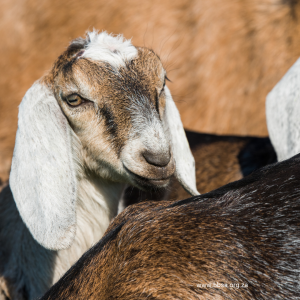
The Grootfontein Biobank for Sheep and Goats is dedicated to helping farmers find better ways to breed their animals.
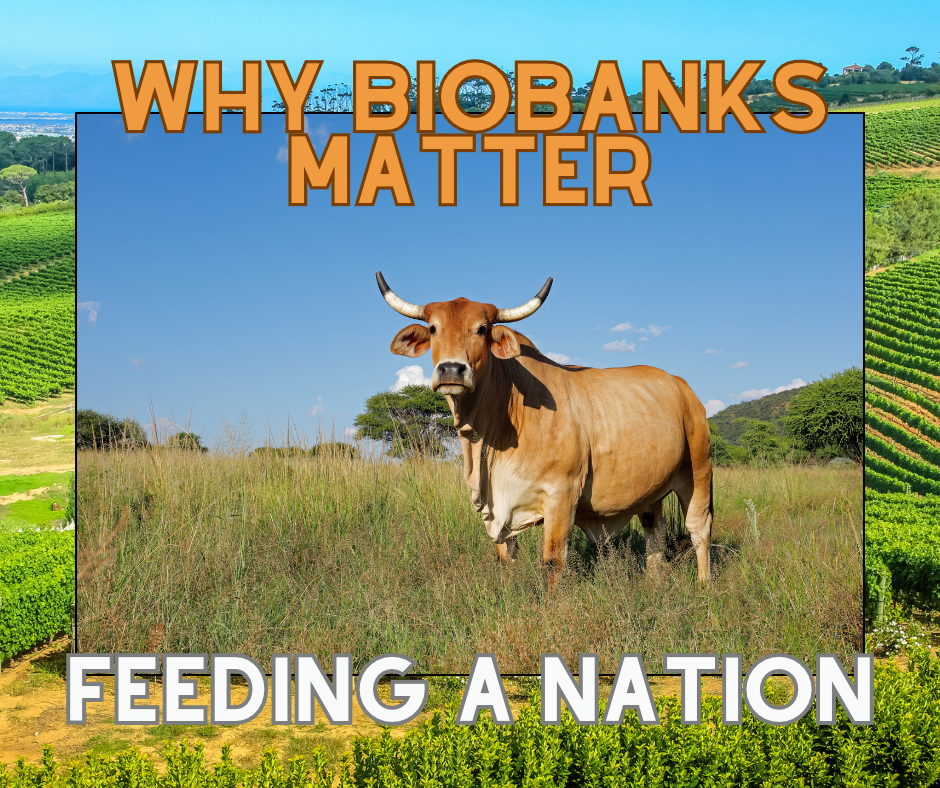
Food security isn’t only about plants. Near Middelburg in the Eastern Cape, the Grootfontein Biobank for Sheep and Goats takes a different approach. Many biobanks store a single sample. At Grootfontein, animals contribute performance data throughout their productive lives, after an initial blood sample. That gives researchers an unusually rich link between an animal’s genes and how it actually performs. Led by Dr Gretha Snyman, the biobank draws on 11 research and private flocks of six breeds, with around 250,000 blood samples from 64,000 animals. Farmers want to breed better animals, and this is exactly the kind of data that helps them do it. As Dr Snyman notes, some of the research has no direct application yet, but that’s part of the point.
Wild Cousins: SANBI’s Wild Plant Seedbank
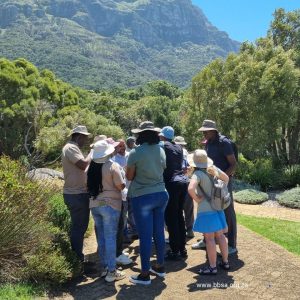
Dedicated teams of SANBI Wild Plant Seed Bank seed collectors travel to remote regions of South Africa to collect seeds from species at risk of extinction.
Crop wild relatives and indigenous plants often carry hardy traits that domestication left behind. South Africa, home to three global biodiversity hotspots, is rich in them, and many are under threat from habitat loss, invasive plants, and over-collection. The SANBI Wild Plant Seedbank, in partnership with Kew’s Millennium Seed Bank Partnership, sends collecting teams to remote areas to rescue species on the brink, focusing on those of conservation concern. Seeds, herbarium specimens, and field data are gathered, and the seeds are dried and stored, where they may stay viable for hundreds of years. With the launch of the seedbank at Kirstenbosch in Cape Town, that diversity is now coming home. And with the aid of the SANBI Indigenous Plant DNA Biobank, we can understand these plants on a deeper level.
The bottom line?
Climate change, pests, and a growing population are making the future of food less certain. Biobanks can’t solve that alone, but they give South Africa options: wheat lines that resist disease, sheep that thrive in tough conditions, wild relatives with genes nobody has used yet, and farmers who keep their own seed.
Every packet of seed, every vial of blood, every culture of yeast is a small bet on the future.
And that’s a bet worth backing.
Still not sure you know why biobanks matter? Find out for yourself. Want to know more about what biobanks are (and aren’t)? Here are five biobanking facts you didn’t know you didn’t know. Want to know more about the Biodiversity Biobanks South Africa? Let us answer your questions here. And if you still have questions, just contact us – we’d love to hear from you.



What are biodiversity biobanks?
Biodiversity biobanks are repositories of biologically relevant resources, including reproductive tissues such as seeds, eggs and sperm, other tissues including blood, DNA extracts, microbial cultures (active and dormant), and environmental samples containing biological communities….
