
Meet The Member: Vinolia Danki – Fixing Fungi For The Future
“Biobanks are much more than repositories for biological material. They are infrastructure that preserves scientific knowledge, supports research and ensures that biological resources remain accessible for future generations.” For microbiologist Vinolia Danki, her work as Biocurator at the ARC-PHP National Collection of Fungi isn’t just about solving puzzles today – it’s about giving us an opportunity to solve the challenges of the future.
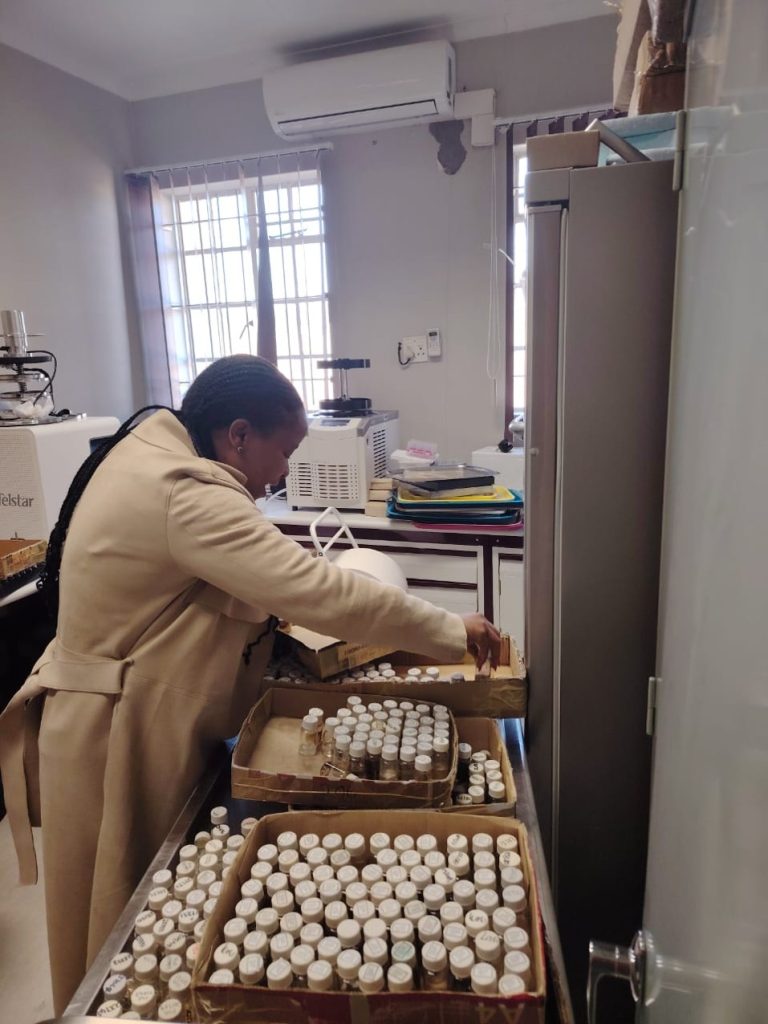
Vinolia Danki’s role as Biocurator at the National Collection of Fungi has allowed her to bring together her interests in microbiology, plant health, genomics, data management and research coordination.
Under the custodianship of the ARC’s Plant Health and Protection Unit, a core member of the Biodiversity Biobanks South Africa (BBSA), the NCF houses over 35 000 specimens of fungi from 160 genera from all over the world (and safeguards an additional 9000 strains from the SAMRC), studies and shares these samples and offers a range of different diagnostic tests, among other things.
Vinolia’s work focuses on linking diverse storage methods to maintain long-term fungal viability and integrating genomic data to advance fungal taxonomy, diagnostics, and conservation.
“What I find most inspiring is knowing that the work we do today can support research that may only happen years from now,” Vinolia notes. “A fungal culture collected decades ago may become important for a research project in the future. Preserving that material correctly, maintaining accurate information about it and ensuring that researchers can find and access it means that we are preserving more than a specimen—we are preserving scientific knowledge and research opportunities.”
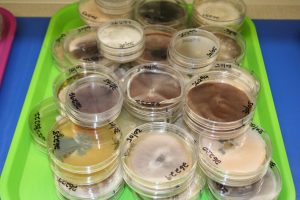
The ARC Invasive Fungi Hub houses several collections of fascinating, fearsome and even fun organisms.
Vinolia developed her interest in science early on.
“My journey into the biological sciences began with a curiosity about how microorganisms interact with their environment and how these interactions influence plants, agriculture and ecosystems. I started my studies in Microbiology, and then became particularly interested in plant pathology and fungal biology – and the rest is history.”
She completed a BSc in Genetics and Physiology at the University of the Free State, followed by a BSc Honours in Genetics, and later completed her MSc in Microbiology at the University of Pretoria through the Forestry and Agricultural Biotechnology Institute (FABI), focusing on the genetics and fitness of Ceratocystis albifundus.
Today, as Biocurator at the National Collection of Fungi at the Agricultural Research Council – Plant Health and Production (ARC-PHP), she gets to put all that knowledge to good use.
“My academic and professional journey has exposed me to different areas of microbiology, including molecular diagnostics, fungal genetics, genomics, plant pathology, microbial identification and biological collections,” she explains. “My career has since evolved from research and molecular biology into the management and curation of biological collections.”
We caught up to Vinolia to talk a bit about her work at the biobank, and what it means to her – and the wider world.
What’s a typical workday for you?
A typical day can involve many different activities. I may be working with biological accessions, checking and updating collection records, coordinating the preservation of fungal cultures, preparing materials for long-term storage, reviewing SOPs, monitoring inventories or helping researchers locate and access biological material. A major part of my work involves ensuring that biological material is properly identified, preserved, documented and traceable. This includes working with different preservation methods, maintaining collection records and supporting the digitisation of the collection. I also work with our team on improving workflows and addressing legacy collection challenges. For example, we have been undertaking large-scale inventory and repacking exercises to improve the organisation and accessibility of cultures within the collection.
What do you enjoy most about your work?
I really enjoy the problem-solving aspect of biobanking. There are often practical challenges that do not have an obvious solution, so you have to think systematically about how to improve a process while maintaining quality, traceability and accessibility. Another aspect I enjoy is the research coordination component of my role. I get to work across different activities rather than being restricted to one laboratory technique or project.
What makes biobanks – and the biobanking community – so important?
South Africa has an incredibly valuable diversity of biological material, and biobanks play an important role in preserving these resources for research, innovation, agriculture, environmental protection, biotechnology and future generations. Ultimately, I think a strong biobanking community contributes to a stronger research environment in South Africa. So for me, one of the most valuable aspects of BBSA is the opportunity to connect biobanks that may otherwise operate independently. It creates a community where we can exchange ideas, develop capacity and establish stronger practices.
How could biodiversity biobanking in South Africa be strengthened?
One of the key challenges facing biobanks in South Africa is accreditation and the lack of clarity around which standards and frameworks should be applied to different types of biobanks. Biobanks can differ significantly in their purpose, biological materials, activities and end users, so determining the most appropriate standard for accreditation can be challenging. Ultimately, having greater clarity around accreditation would strengthen confidence in South African biobanks and make our collections more valuable and accessible to both local and international research communities.
What do you do to relax?
I enjoy spending time with family and friends, getting out of the lab and simply having time to recharge. I also enjoy travelling and exploring new places, trying different restaurants and experiencing things outside my usual routine. For me, relaxation is really about having a balance—sometimes doing something exciting and sometimes doing absolutely nothing!
What’s the best advice you’ve ever been given?
“Don’t be afraid to ask questions.” I have found this advice incredibly valuable throughout my career. Science is constantly evolving, and nobody knows everything. Asking questions allows you to learn, identify gaps in your understanding and sometimes discover a better way of doing something. And along with that, I would add: “remain teachable”. Every person you work with can teach you something, regardless of their position or level of experience. Just give them a chance, and you might be surprised by what you learn.
What’s one thing people would be surprised to know about you?
People are often surprised by how much my work has changed over the years. I started out very much on the research and molecular biology side of microbiology, working with DNA, sequencing and fungal genetics. Today, I spend a significant amount of my time thinking about collections, preservation, quality systems, data, workflows and how biological resources can be made accessible to researchers. I think that is one of the things I enjoy most about my career: there is always something new to learn.
Want to know more about the National Collection of Fungi, and the other ARC biobanks? Just watch this. Or do you want to know about the NCF’s Invasive Fungal Hub? We’ve got you covered. And while you’re at it, why not learn more about what biobanks are (and aren’t) all about?
Related Posts


What are biodiversity biobanks?
Biodiversity biobanks are repositories of biologically relevant resources, including reproductive tissues such as seeds, eggs and sperm, other tissues including blood, DNA extracts, microbial cultures (active and dormant), and environmental samples containing biological communities….
