
Why Biobanks Matter: A Heritage Of Hope, A Legacy Of Life
There’s more to South Africa than just the Big Five. Three of the world’s global biodiversity hotspots, recognised on the basis of levels of endemism and also threat, are located in this one country. We have thousands of unique and interesting species of plants, animals, fungi and more on and around our shores – many of them endangered, and many more not very well-studied.
Biodiversity biobanks can help.
By storing samples from living organisms past and present, they allow us to study, preserve and protect our biodiversity. They can help us fight food insecurity, improve human health, and even combat climate change and ensure environmental sustainability. They can help us learn to deal with diseases and genetic abnormalities in humans and livestock. They can help us develop new technologies that change our lives in ways we can’t even predict. And by preserving our past, they can help us secure our future.
It’s a big job. To keep up, we need more biobanks. And for that, we need more biobankers. And for that, we need to train, promote and celebrate young biobank researchers.
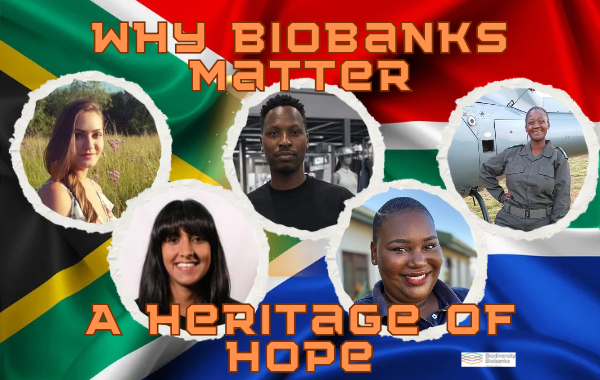
Luckily, the BBSA has that in spades. So here’s why some of the BBSA’s young biobanking superstars do what they do…
Seshnee Reddy: Secrets Of The Sea
The National Research Foundation South African Institute for Aquatic Biodiversity (NRF-SAIAB) is an internationally-recognised centre for the study of aquatic biodiversity. It also hosts the country’s foremost aquatic diversity biobank, storing and studying tens of thousands of samples. That’s a big job – but Biobank Coordinator Seshnee Reddy is up to the job.

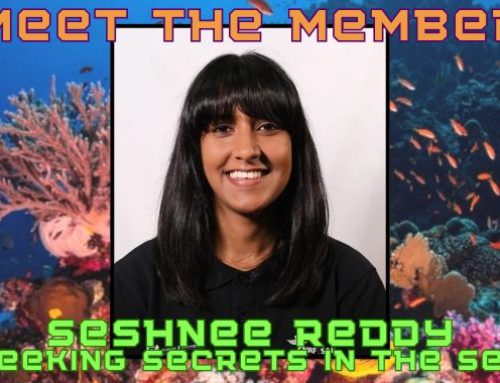
Seshnee Reddy is the Biobank Coordinator at NRF-SAIAB, South Africa’s largest aquatic biodiversity biobank.
Seshnee is the Biobank Coordinator at NRF-SAIAB, responsible for managing and curating biological samples and their associated data to support research, conservation, and long-term preservation efforts at the NRF-SAIAB National Aquatic Biodiversity Biobank – South Africa’s largest aquatic biodiversity biobank.
“Biobanks aren’t just about understanding the past. They’re about using what we learn to impact the future. From identifying new species to understanding the functioning of ecosystems, biodiversity biobanks are helping scientific researchers uncover nature’s most hidden secrets. Knowing that the samples we preserve today can contribute to important research years or even decades from now – that’s a great feeling.”
Read more about what Rekha has to say about life at the BBSA here.
Mosa Kekana: Keeping The World Wild
Growing up, Mosa Kekana always wanted a career involving animals. So what could be a better fit than working at the SANParks Veterinary Wildlife Biobank in Kimberley – one of the wildest biobanks in Africa?
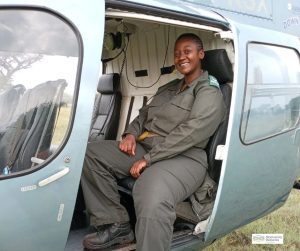
SANParks Veterinary Biobank Senior Technician Mosa Kekana, where she’s always wanted to be – working with (and for) animals.
There are many unique and interesting biobanks in the Biodiversity Biobanks South Africa (BBSA) network. But few of them are quite as wild and wonderful as the SANParks Veterinary Wildlife Services (VWS) biobanks. Working among free-roaming wildlife, the VWS unit in Kimberley is responsible for wildlife capture and translocation, collecting valuable samples from dozens of species, from badgers to buffalo (and more).
“The ability to retrieve past and current samples for disease surveillance and to answer conservation questions makes biobanking so important. My work gives me the opportunity to be versatile, to explore different functions from field to lab work. And being able to help researchers get samples for their research from opportunistic samples, avoiding further immobilisations of animals is something that I find very rewarding.”
Want to know what Mosa thinks about biobanking, life and everything? Find out here.
Sydney Ramulifho – Growth Takes Time
SANBI’s Indigenous Plant DNA Biobank focuses mainly on South Africa’s indigenous plants – of which there are over 20 000, many of them endemic, and many of them not very well understood. Luckily, Biobank Technician Sydney Ramulifho is here to help.
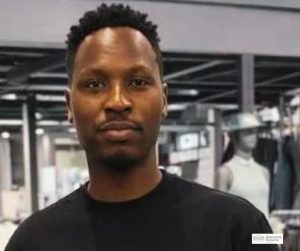
SANBI Indigenous Plant DNA Biobank technician Sydney Ramulifho developed his passion for plants at an early age.
At the biobank, Sydney assists with collecting, preserving, and managing plant genetic resources. His work mainly focuses on fieldwork, herbarium specimen collection, DNA leaf sample collection, and supporting research projects that help protect threatened plant species.
“What keeps me motivated is knowing that the work I do in the plant biobank helps to preserve valuable plant species for future generations. Biobanks help protect biodiversity, support scientific research, assist with conservation of endangered species, and provide material for restoration projects when species are threatened or lost. They also play a key role in addressing challenges such as climate change, habitat loss, and food security. Being part of conservation efforts and contributing to protecting South Africa’s rich plant diversity gives me a sense of purpose and pride.”
Learn more about Sydney’s life-long quest for learning (among other things) here.
Nicole Van Vuuren: Fun With Fungi
Not all fungi are infectious. But a love of fungi definitely is. Just ask Nicole van Vuuren, whose fascination with fungi makes every day as the recently-appointed Curator of the Culture Collection at the University of Pretoria’s Forestry and Agricultural Biodiversity Institute (FABI) a welcome learning experience.

Nicole van Vuuren is Curator of the fungal collections at the University of Pretoria’s Forestry and Agricultural Biotechnology Institute.
The FABI fungal culture collection (CMW) is the largest collection of fungal cultures and the biggest tree pathogenic fungi collection on the African continent, housing more than 60,000 fungal strains from FABI researchers and their global collaborators.
“Biobanks are imperative in preserving biodiversity and making them available for current and future studies. Many of the strains in our collection are important to the forestry and agriculture industries and include ex-types and pathogens. And as a curious individual, I have always been drawn to science – and particularly to microorganisms. So seeing different fungi on a daily basis is a lot of fun and provides an opportunity to learn – and there’s always something new to learn.”
Read more about Nicole’s adventures with fungi here.
Sibahle Gumede: Seeds Of Knowledge
Plant species worldwide are under threat of extinction as a result of habitat loss, invasive alien plants, over-collection and more – and South Africa is no exception. That’s not good news for one of the world’s most biodiverse regions. Luckily, Millennium Seedbank Partnership Seed conservation technician Sibahle Gumede is here to help.
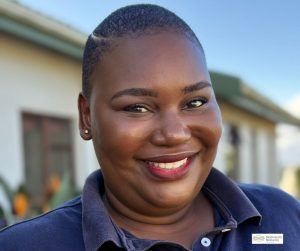
Sibahle Gumede is a nature conservationist currently working for the Millennium Seed Bank Partnership, where she works as a seed conservation technician.
The SANBI Wild Plant Seedbank is one of the core biobanks of the Biodiversity Biobanks South Africa (BBSA), and, in partnership with the Royal Botanic Gardens in Kew, part of the Millennium Seed Bank Partnership (MSBP), an effort to promote plant conservation and habitat restoration in South Africa.
“What I really like about my work is that I get to help save plants that really need it. And why save seeds? Well, other than being beautiful and amazing, seeds are tiny time capsules filled with all the genetic information needed to start a new plant. So by saving these small bits of life, we can have big effects – and give them, and ourselves, a better chance to thrive”
Read more about how Sibahle is helping save South Africa’s seeds here.
The Legacy Continues
Of course, that’s just the tip of the iceberg. There are biobanks on university campuses, in dedicated research facilities and even at national parks, staffed by young, up-and-coming biotechnologists, veterinary scientists or technologists, microbiologists, crop scientists, botanists and more.
Want to know more about the many marvelous biobanks of the BBSA? Read all about them here. Or perhaps you’d like to meet more of the BBSA’s young (and not-so-young) biobankers? Not to worry – we’ve got you covered here. Still have questions? Not to worry – we’ve got you covered.


What are biodiversity biobanks?
Biodiversity biobanks are repositories of biologically relevant resources, including reproductive tissues such as seeds, eggs and sperm, other tissues including blood, DNA extracts, microbial cultures (active and dormant), and environmental samples containing biological communities….
