
Meet the Member: Sibahle Gumede – Planting Seeds Of Knowledge
Plant species worldwide are under threat of extinction as a result of habitat loss, invasive alien plants, over-collection and more – and South Africa is no exception. That’s not good news for one of the world’s most biodiverse regions. Luckily, Millennium Seedbank Partnership Seed Conservation Technician Sibahle Gumede is here to help.
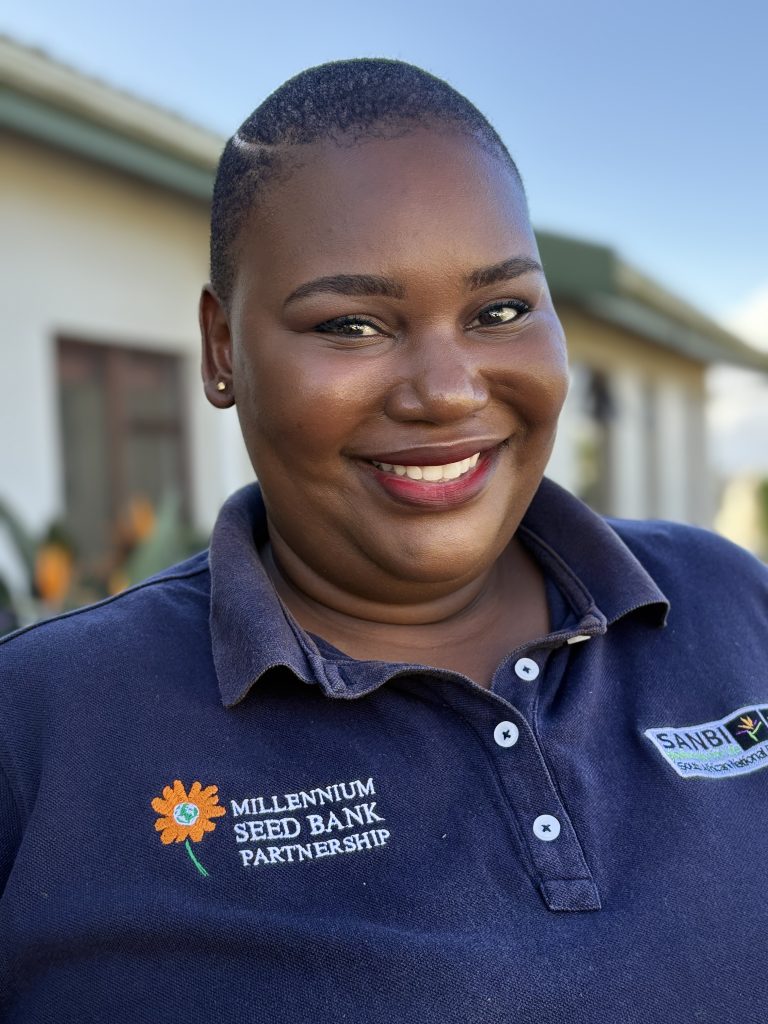
Sibahle Gumede is a Nature conservationist currently working for the Millennium Seed Bank Partnership (MSBP), where she works as a seed conservation technician, helping preserve South Africa’s plant diversity.
The SANBI Wild Plant Seedbank is one of the core biobanks of the Biodiversity Biobanks South Africa (BBSA), and, in partnership with the Royal Botanic Gardens in Kew, part of the Millennium Seed Bank Partnership (MSBP), an effort to promote plant conservation and habitat restoration in South Africa.
Dedicated teams of SANBI Wild Plant Seed Bank seed collectors travel to remote regions of South Africa to collect seeds from species at risk of extinction. These seeds, along with herbarium specimens and field data, are meticulously preserved and sent to the MSBP in the United Kingdom, where they are looked after and stored at -20°C, ensuring their viability for generations to come.
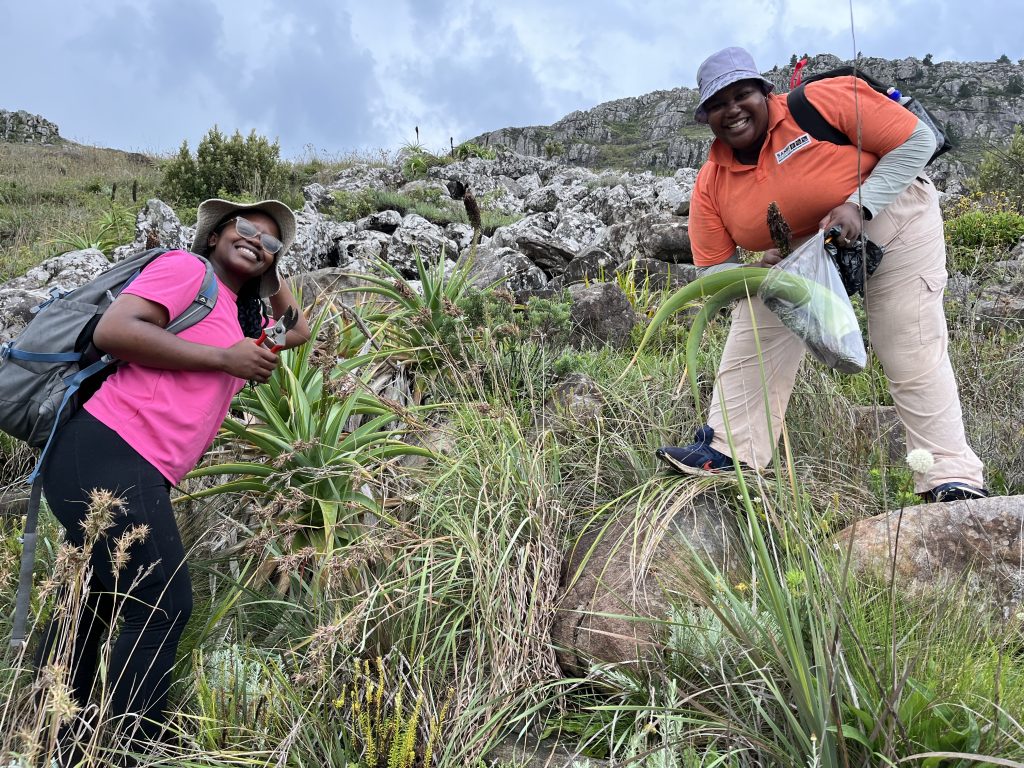
The MSBP mission isn’t just confined to a desk. Dedicated teams of seed collectors travel to remote regions of South Africa to collect seeds from species at risk of extinction – and Sibahle Gumede (right) and MSBP volunteer Aviwe Machakela (right) help make that happen. Picture Credit: Michelle Griffith
“Why save seeds?” Sibahle explains. “Other than being beautiful and amazing, seeds are tiny time capsules filled with all the genetic information needed to start a new plant. So by saving these small bits of life, we can have big effects.”
For the last eight years, Sibahle has been coordinating the MSBP’s activities in the Eastern Cape and KwaZulu Natal provinces, though she has recently moved to Gauteng, where she is now coordinating MSBP activity in the Limpopo and Mpumalanga provinces.
“The main aim of my role is to ensure that all South African plant species are safeguarded, conserved and preserved – and that no plant species get proclaimed as Extinct in our time. All of this we achieve through seed banking.”
But Sibahle wasn’t always that keen on seeds. She started off working mainly on animal conservation – but a chance encounter with an MSBP seed collector changed the trajectory of her career..
“I was introduced to biobanking at the early stages of my career when I was volunteering in KwaZulu-Natal National Botanical Garden,” she recalls. “A lady by the name of Dineo Dibakwane, who was then a seed collector for MSBP in KZN, introduced me to biobanking seeds – and I was hooked.”
It was a lot to take in.
“My understanding back then was, naturally, very limited,” she admits. “But one thing I vividly remember about that period was learning so much about plant conservation – and that there was so much to learn.”
In 2018, she officially joined the team at the Millennium Seedbank Project – and immediately started making her own contributions to banking the diverse flora of South Africa. But the learning never stops.
Sharing (Knowledge) Is Caring: From Seeds To DNA
“Late last year I was then introduced to plant DNA banking,” she notes, “and it has been a whole new world of using different skills and strategies to ensure quality DNA samples are collected.”
Some things never change, though.
“One thing in common that I saw in both collecting seeds and collecting DNA is that quality collections are of value, so this means investing in time to thoroughly do the work and not to rush through. I normally say I work to ensure Quality over Quantity and this has been the case for both seed and DNA collecting.”
For Sibahle, learning and sharing knowledge is part of the job.
“I get to work with people who are experienced in the field, working with plants, with biodiversity as a whole, and I get to learn from them. I also get to share my knowledge with people coming into the field – with students, with volunteers, and more, and to teach them what’s so great about seedbanking.”
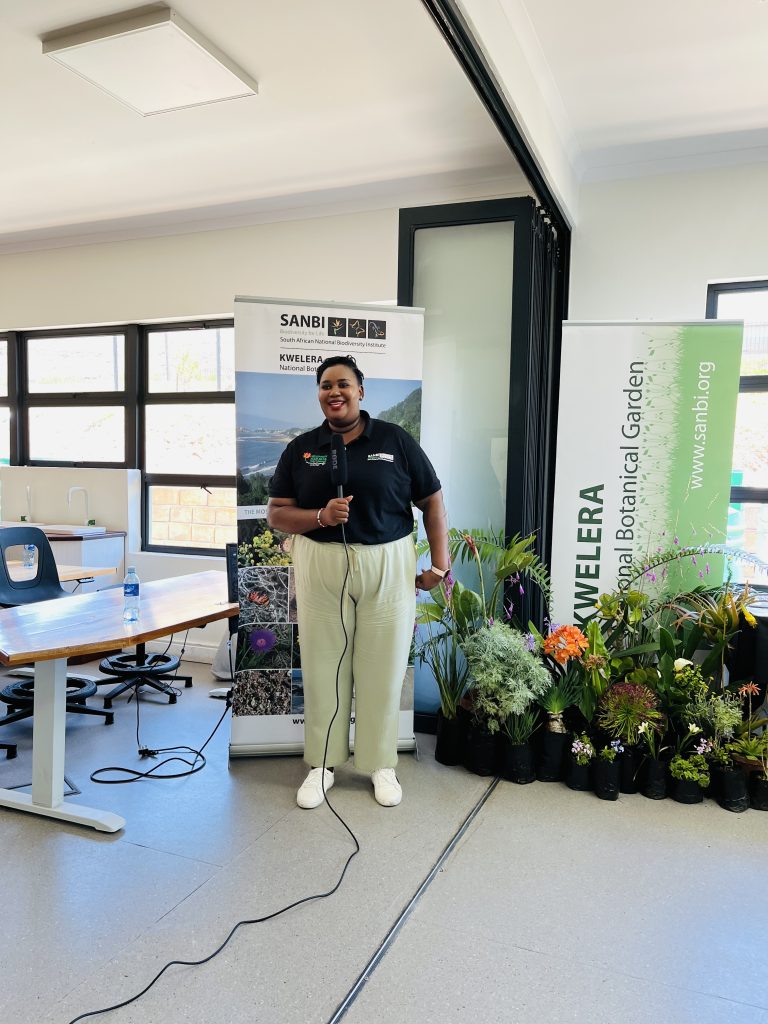
For Sibahle Gumede learning and sharing knowledge is part of the MSBP job.
So what keeps her going after all this time?
“What I really like about my work is that I get to help save plants that really need it. One example: Tulbaghia comminsii, which was critically endangered. We collected the seeds, and we banked them, and the small population now has a chance of growing because of that. For me that was so joyful.”
Want to know more about the SANBI Wild Plant Seedbank? Just watch this. Keen to learn a bit about the Millenium Seedbank Project in South Africa? We’ve got you covered. And while you’re at it, why not learn more about what biobanks are (and aren’t) all about?
Related Posts



What are biodiversity biobanks?
Biodiversity biobanks are repositories of biologically relevant resources, including reproductive tissues such as seeds, eggs and sperm, other tissues including blood, DNA extracts, microbial cultures (active and dormant), and environmental samples containing biological communities….
