
Doing The Groundwork: Establishing a National Soil Biobank in South Africa
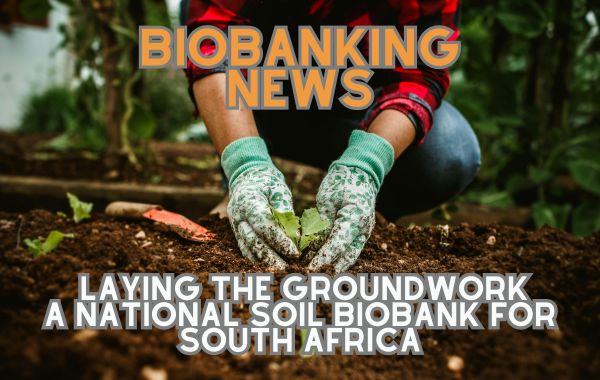
The South African research landscape has taken a significant step forward with the establishment of a comprehensive soil sample database and biobanking system, designed to enhance research, collaboration, and long-term resource management.
Since 2023, an extensive effort has been underway to collect, standardise, and curate soil samples under the newly-established Soil and Agricultural Genomic Biobank (SAGB) as part of the National Collection of Fungi (NCF), and Biodiversity Biobanks South Africa (BBSA) core collection. This initiative has introduced a structured accessioning system, assigning each sample an unique identifier to ensure consistency, traceability, and ease of reference across multiple research platforms.
To date, a total of 1,354 soil samples have been successfully accessioned into the SAGB. These samples represent a valuable national resource and have been systematically submitted for specialised analyses across key soil health disciplines including high throughput sequencing. For example, the Mycology division focuses on the characterisation of fungal communities, while the Nematology division aims to assess the nematode populations present in the soil samples. Furthermore, Natural Resources and Engineering at Agricultural Research Council (ARC_NRE) conducts soil composition and classification analyses, generating critical data on soil type and physicochemical properties.
Collectively, the datasets generated by these divisions form a central component of this initiative, contributing to the development of a dedicated soil metadata database. This system captures detailed information about each sample, including geographical origin, site characteristics, and analytical results. The database not only strengthens data integrity but also enables seamless integration with other NCF collections such as the PPRI living culture collection, supporting the NCF’s national mandate.
The impact of the generated metadata is far-reaching, extending beyond research to benefit farmers and broader agricultural practices by contributing to a better understanding of soil biodiversity. By improving traceability, researchers can confidently link laboratory results back to specific field samples, ensuring both reproducibility and reliability. The standardised framework also promotes collaboration, allowing multiple disciplines to work from a unified dataset and facilitating cross-study comparisons.
As the collection continues to grow, with additional sample sets planned for future phases, the (SAGB) biobank is becoming a key resource for soil biodiversity and agricultural genomics research in South Africa. This initiative supports informed decision-making and strengthens the country’s ability to address environmental and agricultural challenges.
Want to know more about the work of the National Collection of Fungi? We’ve got you covered. Interested in learning more of the many biobanks of the Agricultural Research Council? Read all about them. And ever wondered just how biobanking benefits South Africa? Wonder no more.
Related Posts



What are biodiversity biobanks?
Biodiversity biobanks are repositories of biologically relevant resources, including reproductive tissues such as seeds, eggs and sperm, other tissues including blood, DNA extracts, microbial cultures (active and dormant), and environmental samples containing biological communities….
