
Meet The Member: Nicole Van Vuuren – Always Something New To Learn (About Fungi)
Not all fungi are infectious. But a love of fungi definitely is. Just ask Nicole van Vuuren, whose fascination with fungi makes every day as the recently-appointed Curator of the Culture Collection at the University of Pretoria’s Forestry and Agricultural Biodiversity Institute (FABI) a welcome learning experience.
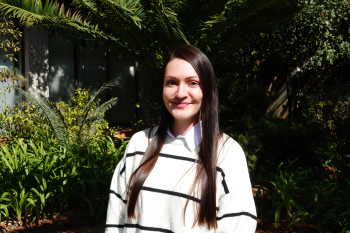
Nicole van Vuuren is Curator of the fungal collections at the University of Pretoria’s Forestry and Agricultural Biotechnology Institute – the perfect position for someone with a fascination for fantastical fungi.
“As a curious individual, I have always been drawn to science – and particularly to microorganisms,” she says. “So seeing different fungi on a daily basis is a lot of fun and provides an opportunity to learn – and there’s always something new to learn.”
And she’s in the perfect place to learn.
A recent addition to the Biodiversity Biobanks South Africa (BBSA) network, the FABI fungal culture collection (CMW) is the largest collection of fungal cultures and the biggest tree pathogenic fungi collection on the African continent, housing more than 60,000 fungal strains from FABI researchers and their global collaborators. CMW-IA is an open culture collection that houses a subset of reference strains that are important for forestry and agricultural research, including plant pathogens, ex-type reference strains and strains whose genomes have been sequenced.
FABI’s culture collections are of international importance as a reference collection for key plant pathogenic fungi that are important for forestry and agriculture. Access to whole genome sequences of these strains is crucial for current and future research projects aimed at understanding the biology, ecology and pathogenicity of these fungi.
“As our collection is developing, the pressing need for funding for preservation systems and space is growing,” Nicole notes. “That’s just one of the reasons we’re glad to be part of the BBSA – but it’s a big one!”
Pretoria born and bred, Nicole’s undergraduate and postgraduate education have both been through the University of Pretoria, where she earned her BSc, Honours and Master’s in Microbiology.
And that’s where her love of fungi really blossomed.
“In 2018 I was awarded the opportunity to partake in the Centre for Plant Health and Biotechnology (CPHB) mentorship programme offered by FABI. This experience allowed me to develop my confidence, and nurture my passion for fungi. In 2023, I joined the CPHB mentorship programme once again, this time as a mentor, and have been part of the committee organising the mentorship ever since.”
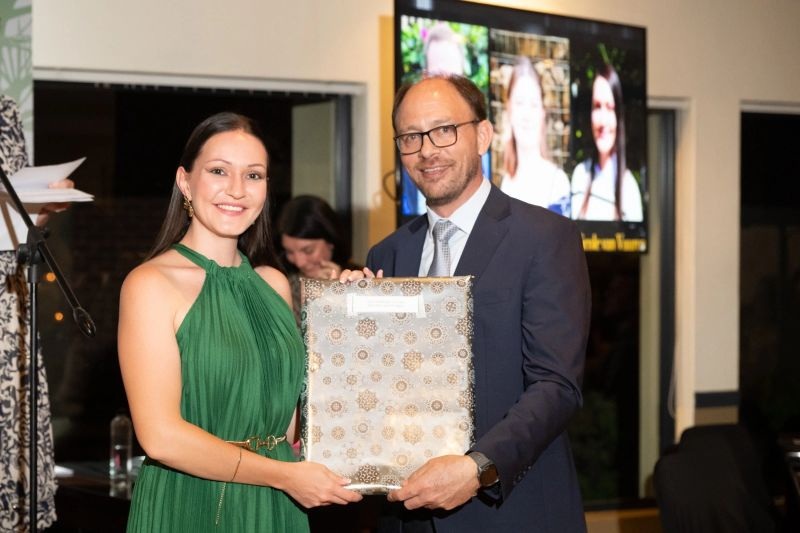
To Nicole van Vuuren, mentoring matters – so it’s no surprise she received a FABI Excellence in Mentorship Award last year. (Pic Credit: FABI)
Those passions are undiminished. Nicole is currently completing a PhD focusing on the diversity of Penicillium in soils across the Western Cape of South Africa, as a component of the larger South African Soil SurveY (SASSY) project, an attempt to characterise fungal communities from soils collected from 100 South African nature reserves using both culture-dependent and -independent methods.
Alongside her fellow FABI researchers Dr Neriman Yilmaz and Prof Cobus Visagie (also her academic supervisors) and several international collaborators, Nicole recently published a comprehensive taxonomic revision of the fungal order Eurotiales, which includes the economically important genera Aspergillus, Penicillium, and Talaromyces, updating accepted species lists and introducing a curated DNA sequence database to support accurate identification and species descriptions.
And she recently received a FABI Mentorship Award for sharing her passion with new generations of young mycologists.
We caught up with Nicole to find out more about life amongst the fabulous fungi of FABI…
What’s a typical work day like for you?
My overall research work focuses on the diversity of Penicillium in the Cape Floristic Region of South Africa. On a day-to-day basis, however, work as the curator keeps me busy. My responsibilities include receiving and accessioning strains into the CMW and CMW-IA collections, managing requests for strains from the CMW and CMW-IA collection by industry and researchers, facilitating the purchases of strains from other collections as well as deposits into other collections, among other things.
What makes biobanks so important in your line of work?
In my opinion, biobanks are imperative in preserving biodiversity and making them available for current and future studies. Many of the strains in our collection are important to the forestry and agriculture industries and include ex-types and pathogens. As part of a long-term collaboration with Hexagon Bio (CA, USA), many whole genomes of fungi in the CMW and CMW-IA collections were sequenced. These genomes hold a wealth of data, which can be used in various research projects.
What’s the most interesting/fun/rewarding part of your job?
I thoroughly enjoy working with the support staff of the collection, as well as with various researchers, both locally and internationally.
What’s your favourite organism?
My favourite microorganisms are members of the Eurotiales due to their varied and diverse nature of ecological functions, and their use in various industries. They’re interesting, and important.
What’s one thing people would be surprised to know about you?
I have a deep appreciation for art in science. FABI as a whole has collected many art pieces and displays them throughout the facility. These art pieces give insight into how others view the world, and I find that really refreshing.
What do you do to relax?
I am a real bookworm, but I do enjoy going to the gym and cooking hearty meals when at home. On the weekends, I like to catch up with family and friends over a cup of coffee.
What was the last book you read that really grabbed you?
I’ve just read the Throne of Glass series by Sarah J Maas, which is an escape from everyday life into a fantasy world. It is not so much an inspirational series, but more a creative outlet.
What are your dreams?
I aspire to continue to grow my experience as the curator of the culture collections housed at FABI, as well as expand on my research in the Eurotiales. I aspire to modernise the preservation systems of the collections, and keep up with the most recent technologies and databasing systems in an effort to maximise the potential of the collections. And on a personal note, I aspire to learn new technologies and data analysis techniques that I can apply to my research.
Want to know more about FABI and its fungal culture collections? Just visit the FABI website. And you can learn more about Nicole there as well. And while you’re at it, why not learn more about what biobanks are (and aren’t) all about?
Related Posts


What are biodiversity biobanks?
Biodiversity biobanks are repositories of biologically relevant resources, including reproductive tissues such as seeds, eggs and sperm, other tissues including blood, DNA extracts, microbial cultures (active and dormant), and environmental samples containing biological communities….
