
Growth Takes Time: Sydney Ramulifho Saves Plants For Future Generations
“Working with plants and conservation has taught me that success does not happen overnight. Growth takes time. And every small effort, whether collecting samples, preserving biodiversity, or learning new skills, contributes to something bigger in the future.”
For SANBI Indigenous Plant DNA Biobank technician Sydney Ramulifho, those are words to live by – and words that perfectly describe how far he’s come.
“I grew up in a rural area in Venda where access to science resources was very limited,” he notes. “Today, I work in a plant biobank managing DNA and herbarium collections—so it still feels amazing to see how far that curiosity has taken me from collecting plants in the field to preserving them for conservation science.”
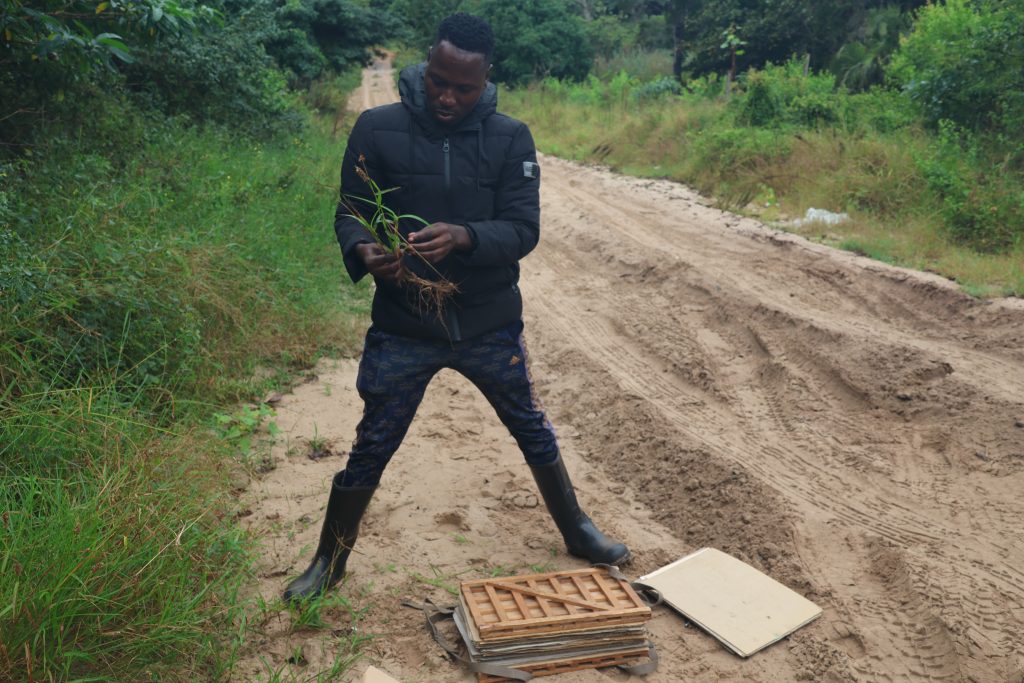
SANBI Indigenous Plant DNA Biobank technician Sydney Ramulifho developed his passion for plants at an early age – and hopes his work can give future generations the chance to do the same.
Sydney was born in Limpopo, Venda, and raised in Malonga Tshimbupfe Village, a rural area in Venda. He completed his BSc degree in Botany and Zoology at the University of Venda, where he later went on to complete an Honours degree in Botany as well.
“I was inspired to pursue this career because of my passion for plants, biodiversity, and conservation,” he recalls. “Growing up in a rural area surrounded by nature made me appreciate the importance of plants and their role in supporting life. My studies in Botany further strengthened my interest in plant science and conservation.”
In 2013, He joined the African Centre for DNA Barcoding (ACDB) as an intern through the Groen Sebenza programme, which was a SANBI/DEA initiative focused on invasive species projects. After his internship contract ended in 2015, the project was extended and he continued gaining valuable experience there.
“One thing I really enjoyed at the ACDB was being part of work that contributes to biodiversity research and conservation. It was interesting to see how DNA barcoding can be used to identify species and support environmental management.”
That experience, and the skills he learned there, have stood him in good stead at the Indigenous Plant DNA Biobank – one of the core biobanks of the Biodiversity Biobanks South Africa (BBSA).
At the biobank, Sydney assists with collecting, preserving, and managing plant genetic resources. His work mainly focuses on fieldwork, herbarium specimen collection, DNA leaf sample collection, and supporting research projects that help protect threatened plant species. His job also involves teamwork, following scientific protocols, and ensuring that plant material is preserved for future study and restoration purposes.
Sydney is definitely making the most of it.
“My experience in the Indigenous Plant DNA Biobank so far has been both exciting and rewarding. It has given me the opportunity to work closely with South Africa’s rich plant biodiversity and contribute to conserving valuable genetic resources for future generations. Overall, it has been a great learning journey that continues to grow my skills and passion for plant conservation.”
Here’s what Sydney has to say about that journey so far – and what he hopes the future may bring.
What’s a typical workday like for you?
A typical workday – well, that depends on the schedule, really. Some days I am in the field, travelling to different areas to collect plant specimens and DNA samples, while recording important data such as habitat and location. Other days I work in the laboratory or the herbarium, where I process collected samples, prepare herbarium specimens, capture data, and assist with conservation research.
What have you learned during your time at the biobank (so far)?
The work has allowed me to learn more about different indigenous plant species and the importance of preserving them, especially those that are threatened or rare. One of the most fulfilling parts of the experience is knowing that the work we do supports research, conservation, and restoration efforts. I have gained practical experience in collecting plant material, processing DNA samples, and maintaining accurate records. And I’ve learned that plant DNA can remain valuable for many years when they are properly collected and stored. They are not just samples, they are a backup for the future of biodiversity, research, and conservation.
What do you love most about your work?
What keeps me motivated is knowing that the work I do in the plant biobank helps to preserve valuable plant species for future generations. Biobanks help protect biodiversity, support scientific research, assist with conservation of endangered species, and provide material for restoration projects when species are threatened or lost. They also play a key role in addressing challenges such as climate change, habitat loss, and food security. Being part of conservation efforts and contributing to protecting South Africa’s rich plant diversity gives me a sense of purpose and pride
What do you do to relax?
When I’m not working, I enjoy spending time in nature, exploring parks or gardens, and learning more about plants and biodiversity. I also like reading, listening to music, and spending quality time with family and friends. On a random weekend, you would probably find me outdoors, relaxing at home, or visiting places where I can enjoy some peace and fresh air.
Where do you see yourself in ten years?
I am passionate about the work I do in the plant biobank, and I would like to see myself taking on more responsibility in research, collection management, and conservation planning. In ten years, I see myself as a senior scientist or curator in a biobank or herbarium, leading projects focused on plant DNA conservation and threatened species protection. I also hope to contribute to capacity building by mentoring young scientists and helping to strengthen conservation efforts that support biodiversity preservation for future generations.
What’s one thing you’d want everyone to know?
One thing I’d like everyone to know is that plant biobanks play an important role in protecting species from extinction. The work we do today can help restore ecosystems and support future generations. What keeps me motivated is knowing that the work I do in the plant biobank helps to preserve valuable plant species for future generations.
Want to know more about the SANBI Indigenous Plant DNA Biobank? We’ve got you covered. Or find out about the other BBSA partner institutions here. And while you’re at it, why not learn more about some of the many amazing men and women of the BBSA?
Related Posts


What are biodiversity biobanks?
Biodiversity biobanks are repositories of biologically relevant resources, including reproductive tissues such as seeds, eggs and sperm, other tissues including blood, DNA extracts, microbial cultures (active and dormant), and environmental samples containing biological communities….
