Meet The Member: Mosa Kekana – Working To Keep The World Wild
Growing up, Mosa Kekana always wanted a career involving animals. So what could be a better fit than working at the SANParks Veterinary Wildlife Biobank in Kimberley – one of the wildest biobanks in Africa?
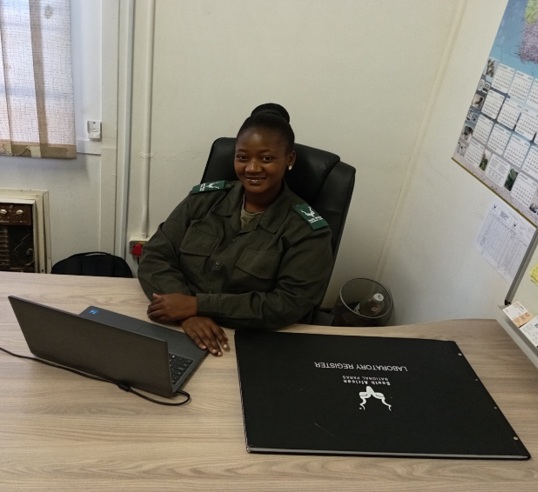
SANParks Veterinary Biobank Senior Technician Mosa Kekana, where she’s always wanted to be – working with (and for) animals.
“My work gives me the opportunity to be versatile, to explore different functions from field to lab work,” she says. “And being able to help researchers get samples for their research from opportunistic samples, avoiding further immobilisations of animals is something that I find very rewarding.”
There are many unique and interesting biobanks in the Biodiversity Biobanks South Africa (BBSA) network. But few of them are quite as wild and wonderful as the SANParks Veterinary Wildlife Services (VWS) biobanks. Working among free-roaming wildlife, the VWS unit in Kimberley is responsible for wildlife capture and translocation, collecting valuable samples from dozens of species, from badgers to buffalo (and more).
It’s a long way from Mokopane, Limpopo, where Mosa was born and raised, the fourth child of five, and where she completed her schooling. After matric, she left to complete her Bachelor of Science degree in Genetics and Zoology at the University of Pretoria.
She moved to Kimberley to work in the biobank – and she doesn’t regret the decision at all
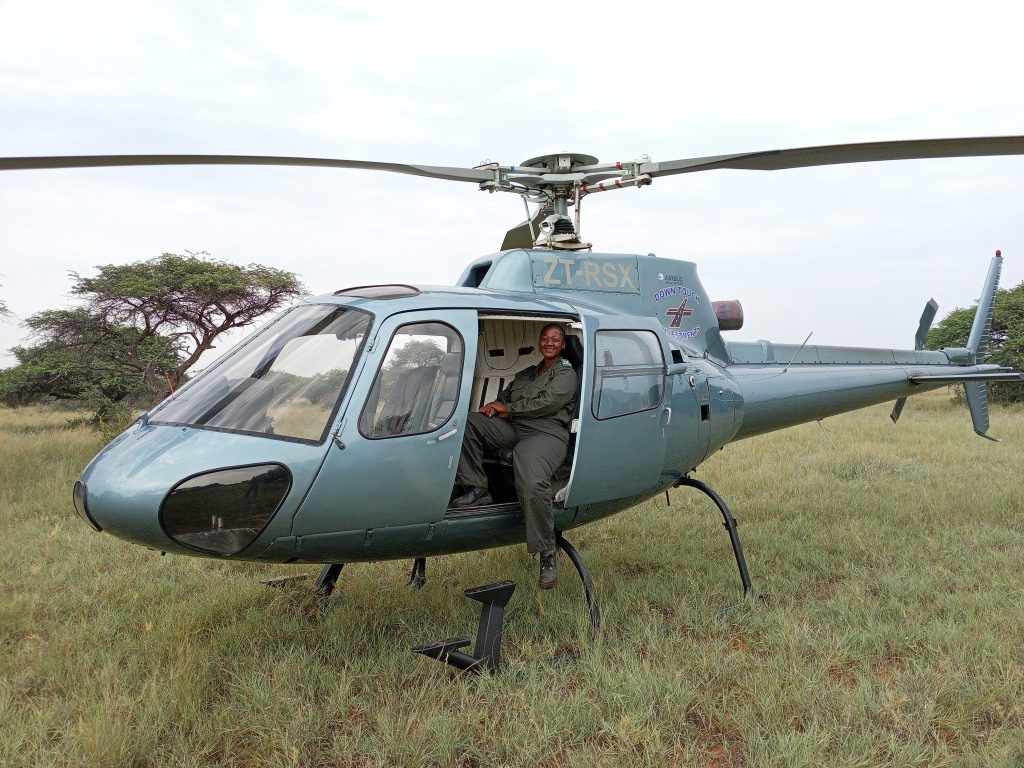
For Mosa Kekana, a typical workday can see her collecting samples in the field, doing processing in the lab or biobank, or somewhere in between.
“In the short time that I have been involved in biobanking, I have developed a great love and a fierce passion for it,” she says. “This is the field I want to grow into. In ten years’ time, I would love to see myself as a biobank curator. And after that, who knows?”
Here’s what Mosa has to say about her biobanking journey (so far)…
What’s a typical work day like for you?
My typical workday is either collecting samples in the field or at the biobank lab – processing, banking and doing admin work. You never know what the day will bring.
What do you find most rewarding about your work?
The ability to retrieve past and current samples for disease surveillance and to answer conservation questions makes biobanking so important. So I get to work on a lot of interesting projects – I‘m currently working on sample collections and processing of ticks, skin, hair, blood smears, blood (EDTA whole blood, serum and heparin-plasma) for the biobank and sampling for Foot and Mouth Disease (FMD) surveys in collaboration with the State Veterinarians.
What is one interesting thing you have learned so far at the biobank?
Research is like a puzzle, and it’s not an easy one. As a Senior Biobank Technician I hold one puzzle piece (sample integrity, for example), and that’s an important part of the picture. But if you want to get the whole picture, that requires teamwork.
What do you do to relax?
Apart from being an animal lover I like to cook, and I’m always trying out new recipes or new restaurants. I also love sports, so on a random weekend if I’m not trying out a new restaurant, you’d probably find me at a stadium watching soccer or rugby.
Who or what truly inspires you?
I’m lucky enough to have crossed paths with many inspiring people in my career – and none shine brighter than Tshegofatso Blessing Sekele, a former colleague at SANBI. Her hard work, loyalty and dedication inspire me a lot. She is one of those colleagues who share knowledge and celebrate the success of others, and I’m happy to have gotten the chance to know her. I hope I can be that inspiration for others one day.
What is the best advice you have ever been given?
Never give up, stay fair and be consistent – in work and in life.
Want to know more about the SANParks Veterinary Wildlife Biobank, and what goes on there? National Zoological Gardens, and why it’s so important? Just watch this. And why not meet some of the other BBSA partner institutions here. And while you’re at it, why not learn more about what biobanks are (and aren’t) all about?
Related Posts


What are biodiversity biobanks?
Biodiversity biobanks are repositories of biologically relevant resources, including reproductive tissues such as seeds, eggs and sperm, other tissues including blood, DNA extracts, microbial cultures (active and dormant), and environmental samples containing biological communities….
