
Biobanking News | Department Of Agriculture National Genebank Strengthens Farmers With Seed Systems Knowledge
Community seed banks provide farmers with an opportunity to actively participate in research initiatives, thereby empowering them and strengthening their control over natural resources. These seed banks also promote the ownership, preservation and documentation of traditional knowledge and skills related to seed conservation and sustainable agricultural practices. That’s why the Department of Agriculture (DoA) is holding information-sharing workshops to equip agricultural advisors with knowledge about seed systems in South Africa.
The focus of these engagements is to highlight the importance of community seed banks and their role in preserving indigenous crops, enhancing food security, and promoting sustainable agricultural practices.
One such workshop, held at Makwarela in Thohoyandou and Ndhambi Village outside Giyani in Limpopo on 10 and 12 February 2026, aimed to capacitate agricultural extension and advisory officers from the Mopani and Vhembe districts with indigenous knowledge and practices to better support local farmers.
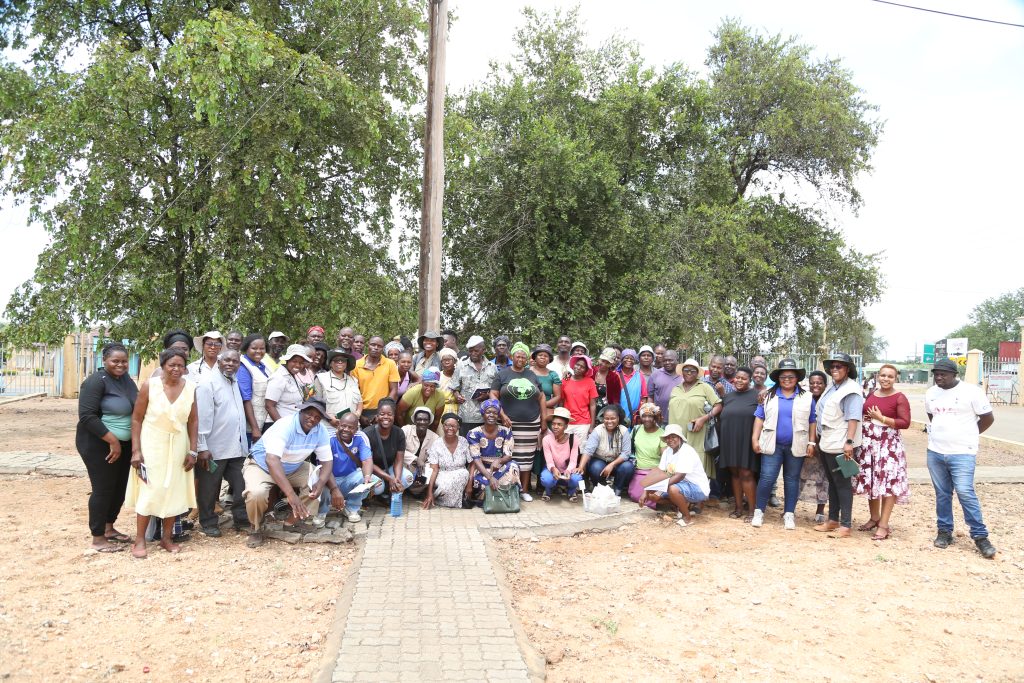
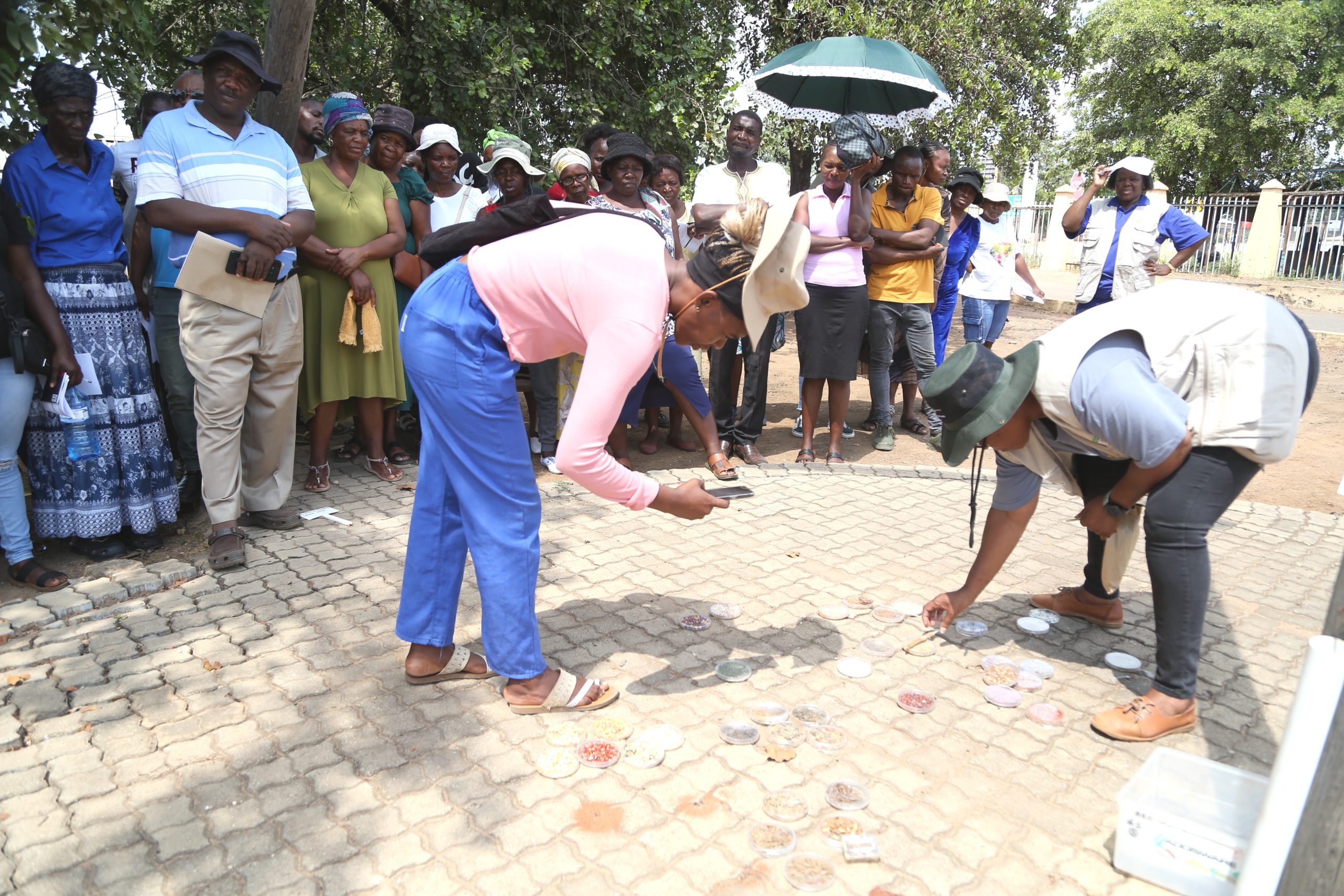
Farmers of Mopani had a fruitful engagement with DoA officials during the workshop at Ndhambi Village.
Issues relating to seed collection, certification, production and traditional seed and food fairs were discussed in detail with farmers and agricultural advisors in both districts. Farmers were also informed about the importance of receiving training to become certified seed producers. DoA emphasised the need for promotion, awareness, conservation and the sustainable use of neglected and underutilised species.
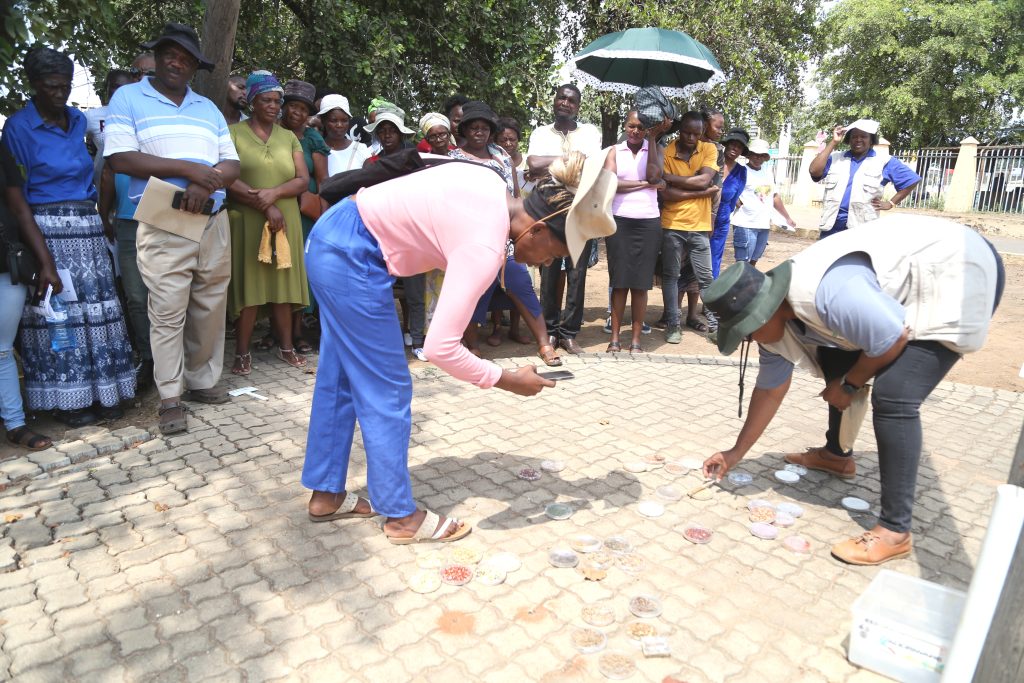
Ms Angie Dibiloane demonstrating the indigenous seeds to farmers of Mopani at Ndhambi village.
Currently, the DoA operates three fully functional community seed banks in South Africa, located in Gumbu (Limpopo), Sterkspruit (Eastern Cape) and Jericho (North West).
DoA is implementing Participatory Plant Breeding (PPB) within community seed banks in Limpopo, Eastern Cape and North West. PPB is an inclusive approach that actively engages farmers in the plant breeding process, enabling them to contribute to and make decisions at various stages of variety development.
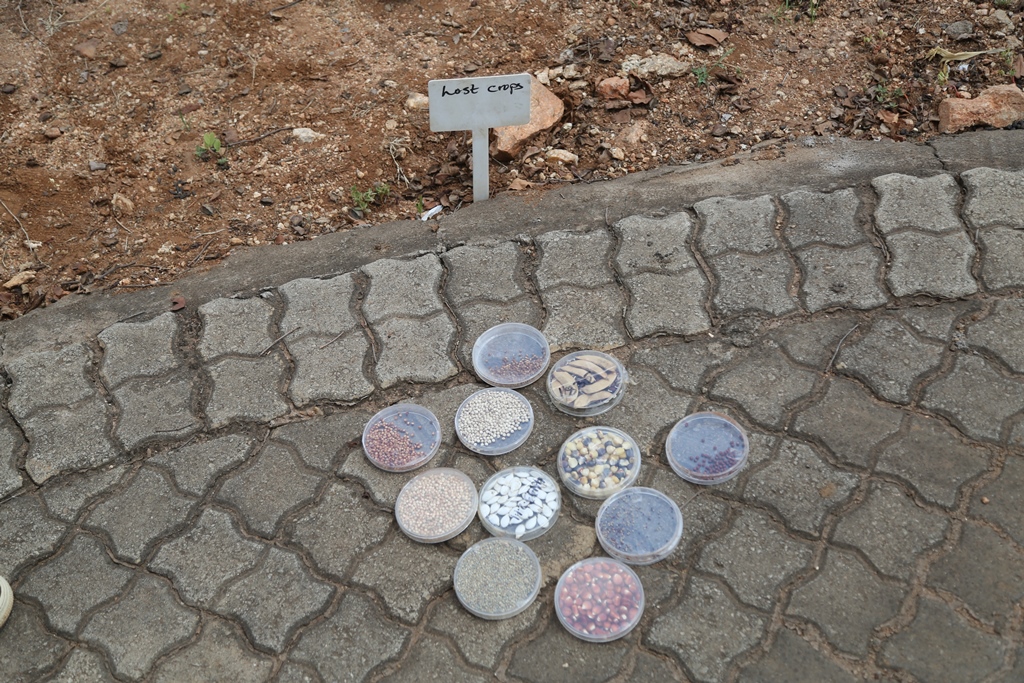
Some of the indigenous seed showcased during the workshop at Ndhambi in Giyani.
Dr Noluthando Netnou-Nkoana from the DoA’s Directorate: Genetic Resources noted that there is growing interest in traditional seeds, but many people do not know where to access reliable information about them. She emphasised that the information provided through these workshops will be highly beneficial to extension officers who work closely with farmers.
“I know that sharing this knowledge will strengthen the capacity of agricultural advisors. Communities must benefit from seed banks and increased promotion and awareness campaigns are necessary to ensure people know about and make use of these resources,” she said, speaking at an information-sharing workshop held at Makwarela in Thohoyandou and Ndhambi Village outside Giyani in Limpopo in February 2026.
Mr Tebogo Thobakgale, who attended the workshop, acknowledged that the workshop was relevant and important to him as an agricultural advisor in the Mopani District, based at Ga-Mokwakwaila Village.
“I am happy that DoA officials continue to host these workshops to inform us about the seed systems in South Africa. I am going to empower the farmers who are working with me,” he said.
Ms Terra Malatji, a farmer from Mopani who also attended the workshop, commended the department for empowering local farmers.
“The workshop has been very informative and we have been encouraged to share our seeds and collaborate as farmers. We are grateful for the continued support from the national and provincial governments and look forward to more initiatives like this,” she said.
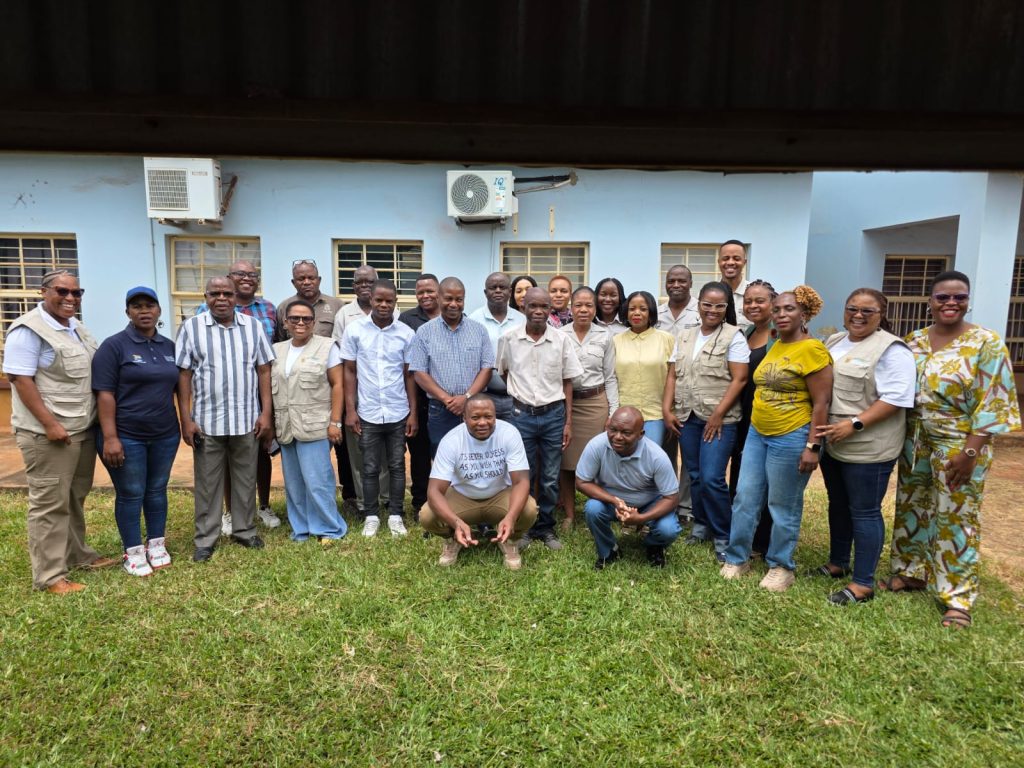
DoA with Vhembe District and Mopani District Agricultural Extension Advisory Services officials.
DoA continues to conduct information sharing workshops in all provinces where seed banks have been established. The programme has already commenced in Limpopo and will be rolled out to Mpumalanga and Free State.
This story and images come courtesy of Samuel Kgatla and Dr Noluthando Netnou-Nkoana.
Mr. Samuel Kgatla is a Principal Communication Officer at the National Department of Agriculture with over 15 years of dedicated service in the public sector. A seasoned photographer and journalist, he has extensive experience in strategic communication, media relations, photography, and content development.
Dr Noluthando Netnou-Nkoana is the Director: Genetic Resources and currently Acting Chief Director: Plant Production and Health at the National Department of Agriculture. She is responsible for policy development and implementation of national programmes pertaining to the plant breeders’ rights system; and conservation and sustainable use of plant genetic resources for food and agriculture.
Want to know more about the Department of Agriculture’s National Plant Genetic Resources Centre? Here’s a quick overview of what the NPGRC gets up to. Need to know a bit more about the NPGRC biobank? We’ve got you covered. And why not check out this NPGRC biobank video while you’re at it?
Related Posts


What are biodiversity biobanks?
Biodiversity biobanks are repositories of biologically relevant resources, including reproductive tissues such as seeds, eggs and sperm, other tissues including blood, DNA extracts, microbial cultures (active and dormant), and environmental samples containing biological communities….
