Biobanks Africa
Joint Biobanking Conference 2025
From 29 September – 3 October 2025, the South African National Biodiversity Institute (SANBI) and the Biodiversity Biobanks South Africa (BBSA) hosted the biggest biobanking event in Africa: the Global Genome Biodiversity Network / International Society for Biological and Environmental Repositories Joint Biobanking Conference 2025.
With this year’s theme, “Where worlds align: biodiversity and human biobanks. Same, but different”, the conference brought together experts in human and biodiversity biobanking from such organisations as the Medical Biorepositories South Africa (MBiRSA), and DIPLOMICS and others to talk shop, share solutions and discuss their work, opportunities and challenges.
Over twenty of those experts were from members of the BBSA Community – including speakers, poster presenters, and representatives on the Local Organising Committee.
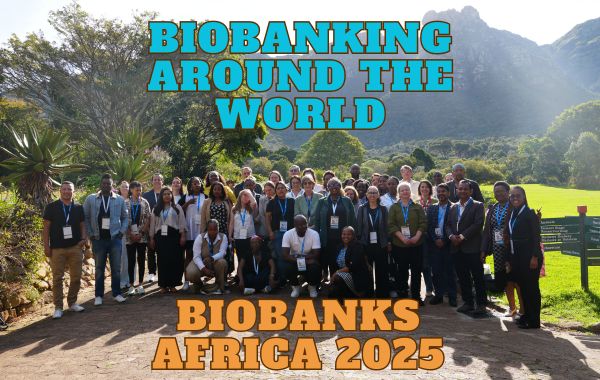
Biobanks Africa 2025: Same, But Different
- Date: 29 September to 3 October 2025
- Time: 09h00 – 17h00
- Venue: Kirstenbosch National Botanical Garden, Cape Town, South Africa
Of course, not all of the biobanking community could afford to make it out to Kirstenbosch – or even attend virtually. So for all those who missed it, videos covering all sessions are available on the dedicated Biobanks Africa 2025 YouTube Channel.

Michelle Hamer – Project Lead
Biodiversity Biobanks South Africa
BIOBANKS AFRICA 2025 BROUGHT TO YOU BY
 The Global Genome Biodiversity Network
The Global Genome Biodiversity Network (GGBN) is an international network of institutions and organisations that share a common interest in long-term preservation of genomic samples of Earth’s biodiversity. The GGBN has over 100 institutional and consortium members, representing nearly 40 countries – including South Africa, where the biobanks of the Biodiversity Biobanks South Africa (BBSA) are all GGBN members.
 The International Society for Biological and Environmental Repositories
The International Society for Biological and Environmental Repositories (ISBER) is a global biobanking organisation that creates opportunities for networking, education, and innovation, and provides a community for harmonising approaches to emerging challenges in repositories, as well as fostering ideas to create new solutions. As a member of ISBER, the Biodiversity Biobanks South Africa can help researchers around the world access South Africa’s vast biodiversity resources – and help find answers to some of our most critical questions, from food security to conservation (and more).
 The Biodiversity Biobanks South Africa
The Biodiversity Biobanks South Africa (BBSA) provides a coordinating structure across several of South Africa’s biodiversity biobanks. The vision of the BBSA is about securing and exploring South Africa’s biodiversity – by increasing the range and quality of samples stored and/or distributed, and increasing and improving access for research and development through a single, centralised data portal, which will also allow more strategic collection of samples.

What are biodiversity biobanks?
Biodiversity biobanks are repositories of biologically relevant resources, including reproductive tissues such as seeds, eggs and sperm, other tissues including blood, DNA extracts, microbial cultures (active and dormant), and environmental samples containing biological communities….