
The National Plant Genetic Resources Centre: Supporting Small Farmers & South Africa’s Food Security
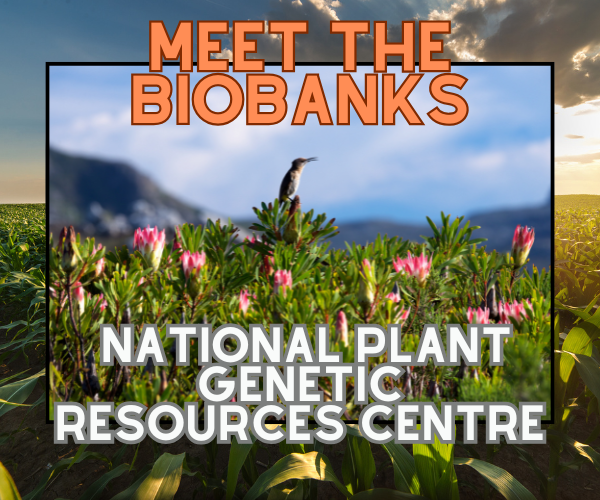
Human civilization as we know it is dependent on agriculture. Most of the food calories we consume come, directly or indirectly, from domesticated plants – and so do many of the products we use every day. So it’s very important that we ensure the conservation and sustainable use of plant genetic resources for food and agriculture. That’s where biobanks like those at the Department of Agriculture’s National Plant Genetic Resources Centre come into play.
In 1996, the Department of Agriculture, Forestry and Fisheries (DAFF) established the National Plant Genetic Resources Centre (NPGRC) to develop and implement policies, legislation, strategies and norms and standards on the management of plant genetic resources for food and agriculture, to regulate and promote the propagating material of genetic resources for food and agriculture and to provide for risk mitigating systems in support of agrobiodiversity.
The National Gene Bank coordinates national activities related to the conservation and sustainable use of plant genetic resources for food and agriculture, which include seed collecting, seed multiplication, characterisation/evaluation/rejuvenation, documentation and gene bank management.
The NPGRC aims:
- To collect, characterise, and evaluate plant genetic resources for food and agriculture.
- To promote the value of plant genetic resources for food and agriculture.
- To regulate access to plant genetic resources for food and agriculture.
- To ensure equitable sharing of any benefits arising from the utilisation of plant genetic resources for food and agriculture.
- To manage international agreements, and protocols relevant to plant genetic resources for food and agriculture.
It’s a big mission. Here’s how the NPGRC does it.
Thinking Local, Acting Global – Small Farmers, Big Results
The gene bank obtains samples of seeds and vegetable species (calabash, sorghum, mung bean and more) from subsistence farming communities, who farm under traditional farming methods to produce their own food – and in some instances using their indigenous agricultural knowledge, and practicing their indigenous beliefs. A duplicate sample in the national gene bank is also deposited with the SADC Plant Genetic Resources Centre.
The considerable genetic diversity of traditional varieties of crops is the most immediately useful and economically valuable part of global biodiversity. Subsistence farmers use landraces as a key component of their cropping systems. Such farmers account for about 60% of agricultural land use and provide approximately 15-20% of the world’s food. In addition, landraces are the basic raw materials used by plant breeders for developing modern varieties.
“Genetic diversity is the basic factor of evolution in species, explains Dr Noluthando Nenou of the NPGRC. “It is the foundation of sustainability because it provides raw material for adaptation, evolution and survival of species and individuals, especially under changed environmental, disease and social conditions and it will allow them to respond to the challenges of the next century. The future food supply of all societies depends on the exploitation of genetic recombination and allelic diversity for crop improvement and many of the world’s farmers depend directly on the harvests of the genetic diversity they sow for food and fodder, as well as the next season’s seed.”
For thousands of years, farmers all around the world have been overseeing evolution in crops, combining genes in new and different ways to form new varieties suited to their needs. The NPGRC just aims to help us do that a little bit better.
Want to know more about the National Plant Genetic Resources Centre? Here’s a quick overview of what the NPGRC gets up to. And while you’re at it, why not find out about the other BBSA partner institutions here, or learn more about what biobanks are (and aren’t) all about?
Related Posts



What are biodiversity biobanks?
Biodiversity biobanks are repositories of biologically relevant resources, including reproductive tissues such as seeds, eggs and sperm, other tissues including blood, DNA extracts, microbial cultures (active and dormant), and environmental samples containing biological communities….
