Biobanking News: Stephanie Lawrence Represents IMBM For International eDNA Training
In November 2025, Stephanie Lawrence was one of only six South Africans selected to attend the prestigious BioDATA Advanced Course at the Biological Station in Drøbak, Norway, where she gained exposure to and expertise in environmental DNA workflows and sequencing, moving from macro-diversity to microbial insights..
This prestigious collaborative initiative between the Global Biodiversity Information Facility (GBIF) Norway, the Natural History Museum of the University of Oslo, and the South African National Biodiversity Institute (SANBI), which hosts GBIF South Africa, offers training in biodiversity data management, publishing, and molecular monitoring for students in Norway and South Africa. The BioDATA Advanced DNA Wet Lab and Bioinformatics Training Course specifically aimed to develop capacity in Biodiversity Informatics areas, and offered an intensive “field-to-data” deep dive into environmental DNA (eDNA) research workflows.
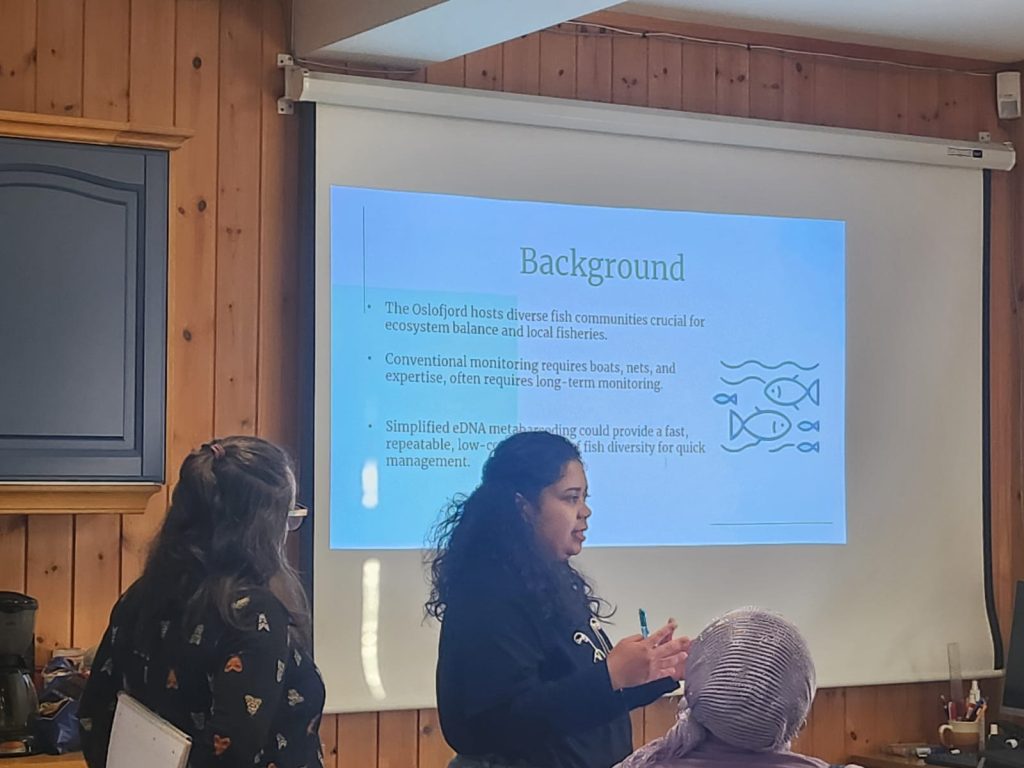
Stephanie Lawrence, Biobank Technical Officer at the Institute for Biotechnology and Metagenomics, was one of only six South Africans selected for the prestigious BIODATA Advanced Lab in Norway. (Pic Credit: Sephanie Lawrence)
Stephanie is the Biobank Technical Officer at the Institute for Microbial Biotechnology (IMBM) at the University of the Western Cape (UWC). The IMBM is recognised as one of the leading research units at the University of the Western Cape (UWC), is considered a global competitor in microbial biotechnology and metagenomics, and has state-of-the-art facilities and equipment – and hosts one of the core microbial biobanks of the Biodiversity Biobanks South Africa (BBSA).
Over the course of two weeks, the activities prioritised immersive, hands-on training over traditional classroom learning, and presented a unique opportunity to gain experience with eDNA sampling, different DNA library preparation chemistries, and downstream bioinformatics analysis. Stephanie gained exposure to the molecular workflows required for eDNA sequencing using Oxford Nanopore Technologies, as well as the bioinformatics pipelines needed to transform raw sequencing data into informative and value-added outputs.
Beyond the laboratory, the programme included an eDNA Symposium focused on the intersection of biodiversity monitoring and regulatory policy. The sessions explored cutting-edge applications, such as using soil eDNA to assess plant diversity and validating airborne eDNA approaches to monitor terrestrial vertebrates.
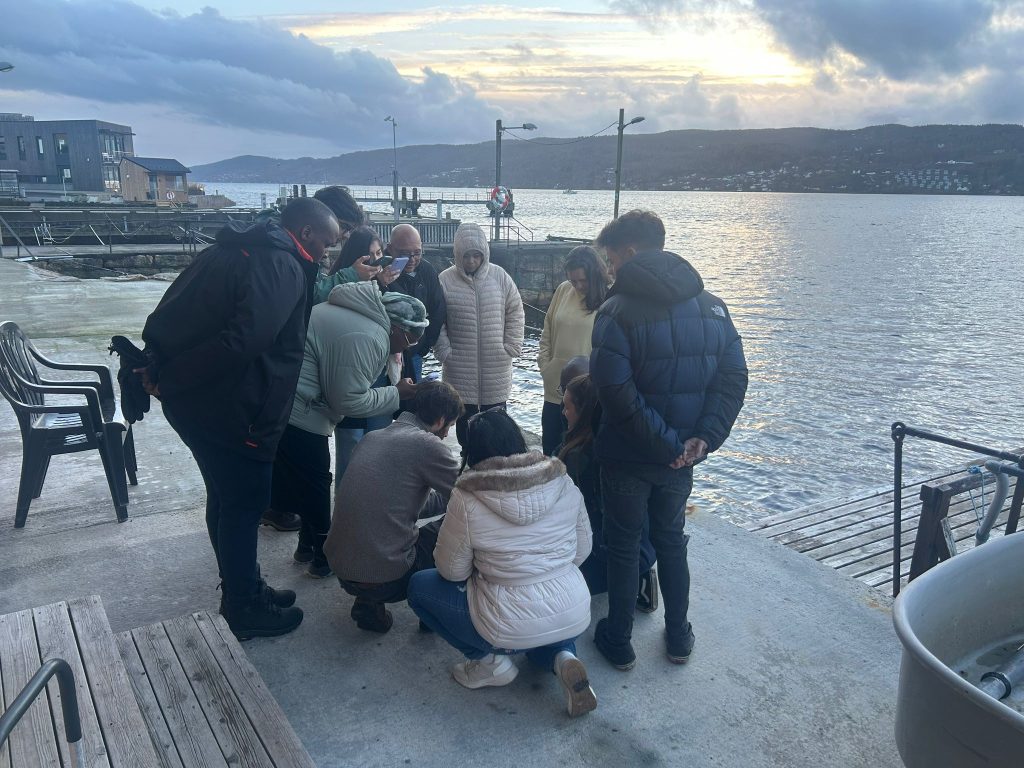
A significant highlight of the BIODATA Advanced Lab in Norway was the sample collection conducted at the Drøbak Aquarium and in the Oslo Fjord, a 100–120 km long scenic inlet in south-eastern Norway stretching from Oslo to the North Sea. (Pic Credit: Sephanie Lawrence)
For Stephanie, the experience was transformative. “It reshaped my perspective on data interpretation, encouraging a more critical approach to analysis and the ability to view scientific insights from multiple angles”.
Reflecting on the experience, she emphasises the value of the dedicated environment the course created, “The training was like a bootcamp-style retreat. It gave me the rare space to focus entirely on data analysis and to think creatively about scientific questions.” She adds that beyond the technical skills gained, solidified her confidence in navigating complex datasets.
The course provided Ms Lawrence with an opportunity for professional development, but also equipped her to take on a more prominent leadership role in expanding the IMBM Biobank’s offering.
Dr Anita Burger, IMBM Biobank Manager, notes: “Ms Lawrence plays a key role in the growth and success of the IMBM Biobank, and this training opportunity both celebrated her achievements to date but also provided her with an opportunity to invest in her professional and personal growth”.
Sephanie’s understanding of how metabarcoding and eDNA methodologies can be integrated to better understand and preserve biodiversity, will expand the scope and quality of the metadata of the IMBM Biobank collection, and also generate new avenues for genome mining and biodiversity research.
Want to learn more about Stephanie’s experiences at the BIODATA Advanced Course, and what it means for her work at the IMBM? Read the full story here, in her own words: https://imbm.co.za/services/biobank/
IMBM: Building A Better Biotech Future
The IMBM biobank forms one of the seven core biobanks of the Biodiversity Biobanks South Africa (BBSA). The Institute hosts a collection of about 4000 bacterial strains from a wide range of South African indigenous environments, including marine bacteria from the South African coastline, medicinal fynbos, and extreme environments. As a microbial biobank with specialised and dedicated equipment, entries that meet international biobanking standards and an information-rich database, the biobank doesn’t only produce cutting-edge researchers – it also helps to produce the next generation of cutting-edge researchers.
Find out more about the IMBM’s capacity-building efforts, and how the Institute is helping to build a new generation of biotech experts here. Or why not watch IMBM researchers in action here? And if you’re interested in joining, working with, or just learning about the IMBM, just visit their website.

Related Posts


What are biodiversity biobanks?
Biodiversity biobanks are repositories of biologically relevant resources, including reproductive tissues such as seeds, eggs and sperm, other tissues including blood, DNA extracts, microbial cultures (active and dormant), and environmental samples containing biological communities….
